Why Your Anchovy Broth Turns Bitter and How to Stop It
Quick Answer: Anchovy broth turns bitter for three reasons, in order of frequency: you left the heads and guts in, you boiled it too long or too hard, or the kelp stayed in past the ten-minute mark. Clean the anchovies, simmer them 10-15 minutes at a bare bubble, and pull the kelp out early. A broth that has gone bitter cannot be fixed, only diluted.
You followed the same steps as always. The broth still came out with a metallic edge that flattened the whole stew.
The good news is that this is one of the most fixable problems in a Korean kitchen — and the fix is mostly about doing less.

What makes anchovy broth bitter in the first place?
Three sources, and they are easy to tell apart once you know what each one tastes like.
The guts and heads. The dark viscera inside a dried anchovy carries most of the bitterness. In small anchovies used for banchan it does not matter. In the larger broth anchovies, it absolutely does. This bitterness is sharp and a little metallic, and it is present from the beginning of the simmer.
Over-boiling. Anchovies release clean umami early and then start giving up bitter compounds and a fishy heaviness as they break down. Past about 20 minutes at a hard boil, the broth turns cloudy and the flavor goes muddy. This bitterness arrives late and is accompanied by cloudiness — that is the diagnostic.
The kelp overstaying. Dasima releases glutamates fast and then starts leaching a slick, faintly bitter, almost seaweedy note along with alginates that make the broth viscous. Kelp should be in for around ten minutes and out. If your broth feels slightly slippery on the tongue as well as bitter, this is your culprit.
There is a fourth, less common one: anchovies that have gone rancid in storage. Dried anchovies are oily and they oxidize. If yours have been in a cupboard for a year, the bitterness was there before the pot was.
How do you actually prepare the anchovies?
Two minutes of prep decides most of the outcome.
Pull the heads and guts. Snap the head off and pinch out the dark line inside the belly with your thumbnail. For a standard pot of broth using around 15-20 large anchovies, this takes about three minutes and it is the single highest-impact step. Some cooks keep the heads for depth — if you do, at minimum remove the guts.
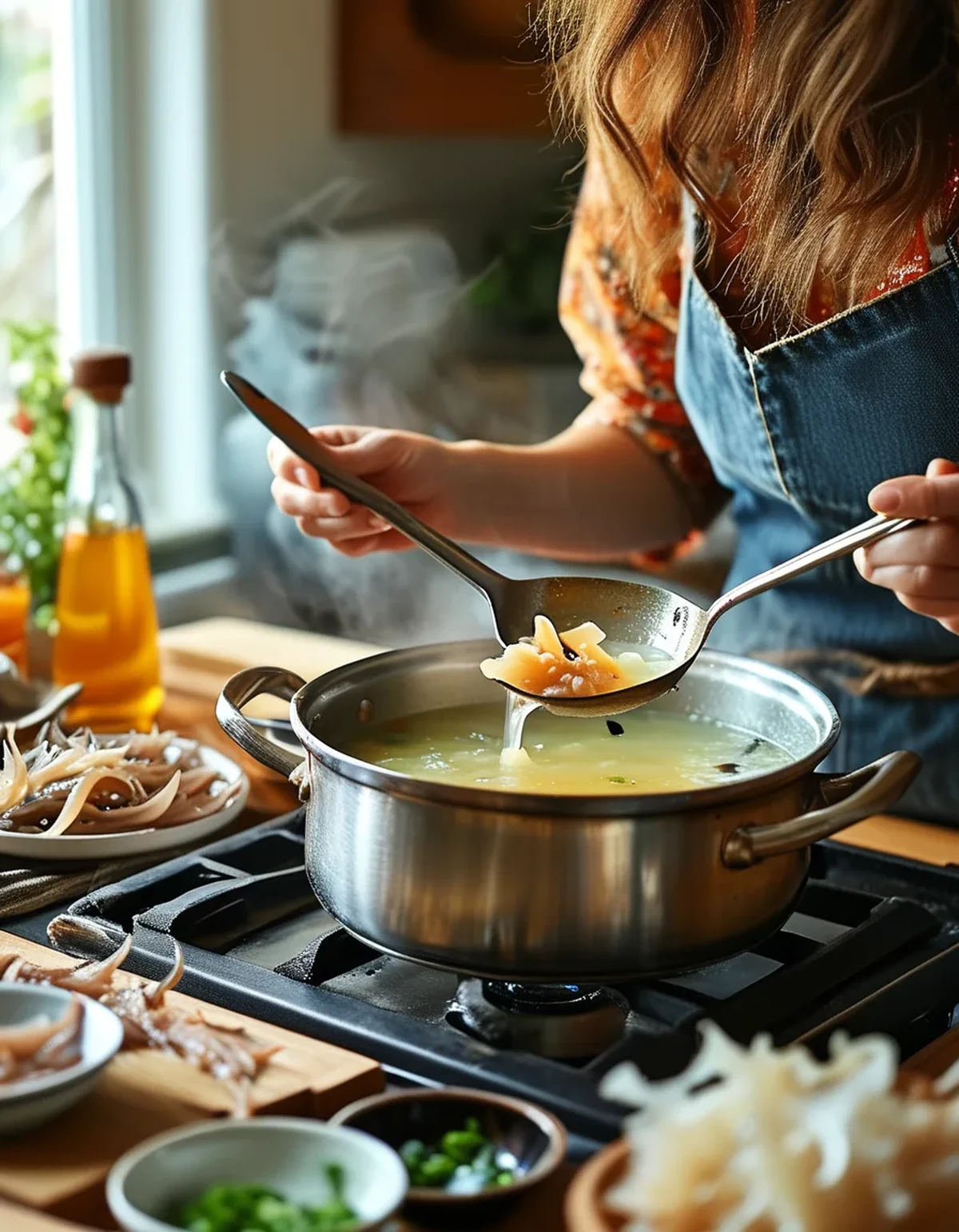
Toast them dry first. Thirty seconds to a minute in a dry pan over medium heat, or two minutes in a dry pot before you add water, drives off the fishy volatiles and deepens the flavor considerably. This step is what separates broth that tastes clean from broth that tastes like a fish tank.
Use enough, but not too many. Roughly 15-20 large anchovies per 1.5 liters of water is a normal ratio. Doubling the anchovies does not double the umami — it mostly doubles the fishiness.
Store them in the freezer. Dried anchovies keep their flavor for months in the freezer and go off within weeks in a warm cupboard. This is the single easiest upgrade to every Korean soup you make, and it costs nothing.
Rinse only if dusty. A quick rinse is fine, but soaking washes away flavor you paid for.
5 Mistakes Everyone Makes With Korean Broth
1. Boiling it hard. A rolling boil emulsifies fats and pushes out bitter compounds. You want a bare simmer — surface just trembling. Cloudy broth is almost always over-boiled broth.
2. Adding the kelp at the same time and leaving it. Kelp goes in cold water, comes out around ten minutes, or at the moment the water reaches a simmer. Ten minutes of kelp is generous, twenty is a mistake.
3. Simmering for an hour because that is what you do with chicken stock. Anchovy broth is not a long stock. Fifteen minutes of simmering after the water comes up is the standard, and past 20-25 minutes you are actively making it worse. This is the mistake that surprises people who cook a lot of Western food.
4. Salting the broth itself. Season the finished dish, not the base. Doenjang, gochujang, and soy all bring significant salt, and a pre-salted broth boxes you in.
5. Squeezing the solids when straining. Pressing the anchovies against the strainer pushes out exactly the cloudy, bitter material you spent the whole time avoiding. Let it drip.
What does a good broth timeline look like?
The whole process is under half an hour and most of it is unattended.
Start cold. Anchovies and kelp go into cold water together. Cold-water extraction gets clean flavor from both without heat damage. If you have twenty minutes, let them sit off the heat first — this alone improves the result noticeably.
Bring it up slowly and pull the kelp. Medium heat until the first small bubbles appear. Take the kelp out now. It has given you what it has.
Simmer 10-15 minutes. Barely bubbling. Skim any foam. You will smell the point where it turns from savory to fishy — that is your cue to stop, and it is usually earlier than you expect.
Strain and use, or cool and store. Refrigerated it holds three or four days. Frozen in an ice cube tray, it is the fastest weeknight upgrade there is — two cubes turn instant noodles into something worth eating.
Optional additions that pay off: a few dried shiitake for depth, a chunk of daikon for sweetness, a scallion root end. All go in with the cold water. Skip garlic and onion here — they belong in the dish, not the base.
If your broth already tastes bitter, there is no rescue. Dilute it, use it in a heavily seasoned stew where gochujang can cover it, and start over next time.
FAQ: Korean Broth Questions, Answered
Can I use anchovy broth packets instead?
Yes, and they are genuinely convenient. The trade-off is that most packets contain the whole anchovy including guts, so they go bitter faster — follow the package time strictly rather than treating it as a suggestion, and do not squeeze the bag.
Why is restaurant broth so much clearer than mine?
Temperature control. Restaurants hold broth just below a simmer for the whole service. At home, the moment you walk away and it comes to a boil, you get the cloudiness. A lid tilted slightly open helps more than watching the pot.
Does it matter which anchovies I buy?
It matters a lot. Look for the larger broth-grade anchovies, ideally with a silvery rather than yellowed look — yellowing means oxidation, which means bitterness before you have done anything. Buy smaller packages more often and keep them frozen.
TL;DR:
- Bitterness comes from guts left in, over-boiling, or kelp left past ten minutes — in that order
- Head and gut the anchovies, dry-toast them briefly, and start them in cold water
- Simmer 10-15 minutes at a bare bubble, pull the kelp at first bubbles, never squeeze the strainer
- Freeze your dried anchovies; oxidized ones are bitter before they hit the water
Korean broth rewards restraint more than technique. Almost every bitter pot is a pot that was cooked with more enthusiasm than it needed.
Keep Reading
This article is for general informational purposes only and is not medical advice. Always consult a qualified health professional for guidance specific to you.