Why Doenjang From Different Brands Can Taste Nothing Alike in the Same Recipe
Quick Answer: Doenjang taste varies significantly between brands because fermentation time, soybean-to-salt ratio, and whether it’s traditionally fermented versus factory-produced all differ — a longer-fermented, traditional doenjang is deeper and funkier, while a mass-market version is milder and saltier. Matching the brand to the dish, rather than assuming any doenjang works the same, fixes most flavor mismatches.
You follow the exact same recipe with a different jar of doenjang and the jjigae tastes flatter, saltier, or oddly sharp. The recipe didn’t fail — the paste underneath it changed.

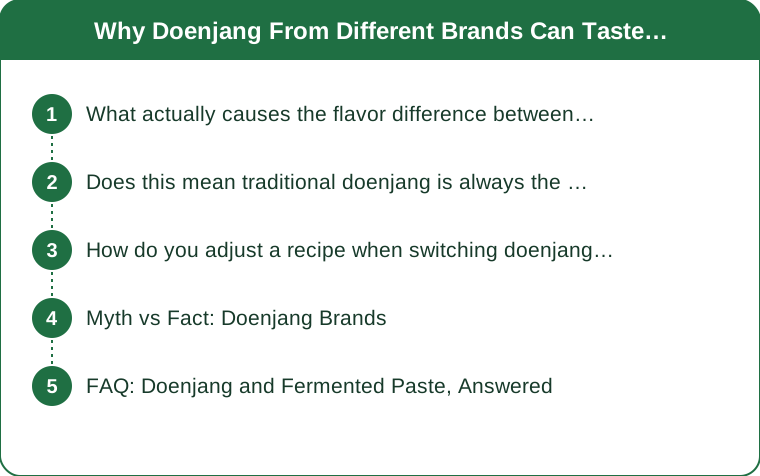
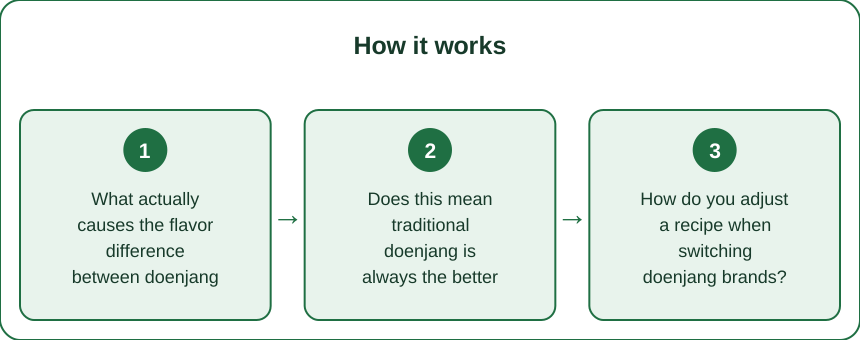
What actually causes the flavor difference between doenjang brands?
Fermentation time is the biggest factor — traditionally fermented doenjang (jaerae-sik) often ferments for many months to over a year, developing deep umami and complex funk, while factory-style doenjang ferments for a much shorter, standardized period for consistency and shelf stability. Soybean-to-salt ratio and whether rice or other grains are blended in also shift sweetness and saltiness.
This is similar to comparing an artisanal aged cheese to a mass-produced one — both are technically the same category of food with very different intensity.
Does this mean traditional doenjang is always the better choice?
Not necessarily — factory-style doenjang’s mildness and consistency actually works better in some dishes, particularly ones where doenjang is one ingredient among many rather than the star, like a quick vegetable stir-fry. Traditional, deeply fermented doenjang can overpower a lighter dish, while it’s exactly what a proper jjigae needs to taste right.
The ‘better’ choice depends on what the dish is asking the paste to do, not a universal quality ranking between styles.

How do you adjust a recipe when switching doenjang brands?
Taste and adjust salt last, not first — since saltiness varies significantly between brands, adding all your recipe’s salt upfront based on habit can leave a milder-brand dish under-seasoned or a stronger-brand dish oversalted. Start with slightly less doenjang than the recipe calls for with an unfamiliar brand, then build up to taste.
This single adjustment habit solves most of the ‘this doesn’t taste like it used to’ problem when you switch jars.
Myth vs Fact: Doenjang Brands
Myth: All doenjang is basically interchangeable in any recipe. Fact: Fermentation style changes intensity enough that swapping brands without tasting as you go can noticeably shift a dish’s balance.
Myth: More expensive or ‘traditional’ always means better for every dish. Fact: Milder factory-style doenjang is genuinely the right choice for lighter dishes where you don’t want fermented funk to dominate.
FAQ: Doenjang and Fermented Paste, Answered
How can I tell if a doenjang is traditionally fermented just from the label?
Look for terms indicating long fermentation or handmade production, and check the ingredient list — shorter ingredient lists with just soybeans, salt, and water often (though not always) indicate a more traditional style.
Does doenjang go bad, or does it keep improving with age once opened?
Properly stored (refrigerated, sealed) doenjang keeps well for months and some flavor deepening can continue, but watch for off smells or mold as with any fermented product.
Can I mix two doenjang brands to balance flavor?
Yes, this is a common practical fix — blending a mild and a stronger doenjang lets you dial in intensity without fully committing to either extreme.
TL;DR:
- Fermentation time and salt ratio are the main reasons doenjang varies so much between brands
- Traditional, long-fermented doenjang suits jjigae; milder factory versions suit lighter dishes
- Adjust salt and quantity to taste when switching brands rather than following amounts by habit
- Blending two brands is a legitimate way to dial in the flavor you want
A dish tasting ‘off’ after switching doenjang usually isn’t a recipe problem — it’s just two genuinely different products being treated as one.
Keep Reading
This article is for general informational purposes only and is not medical advice. Always consult a qualified health professional for guidance specific to you.