Why Doenjang Jjigae Tastes Flat When You Use Water
Quick Answer: Doenjang jjigae tastes flat with plain water because the stew has no glutamate or starch base to carry the paste. Traditional versions use ssalddeumul (second-rinse rice water) or a quick anchovy-kelp broth, which add starch body and free glutamates. Swapping water for either one changes the stew more than adding more doenjang ever will.
You followed the recipe. Two tablespoons of doenjang, tofu, zucchini, a bit of chili. It smells right.
Then you taste it and it is salty on the front and empty behind. So you add more paste, and now it is just saltier and still empty.
The paste was never the missing part.
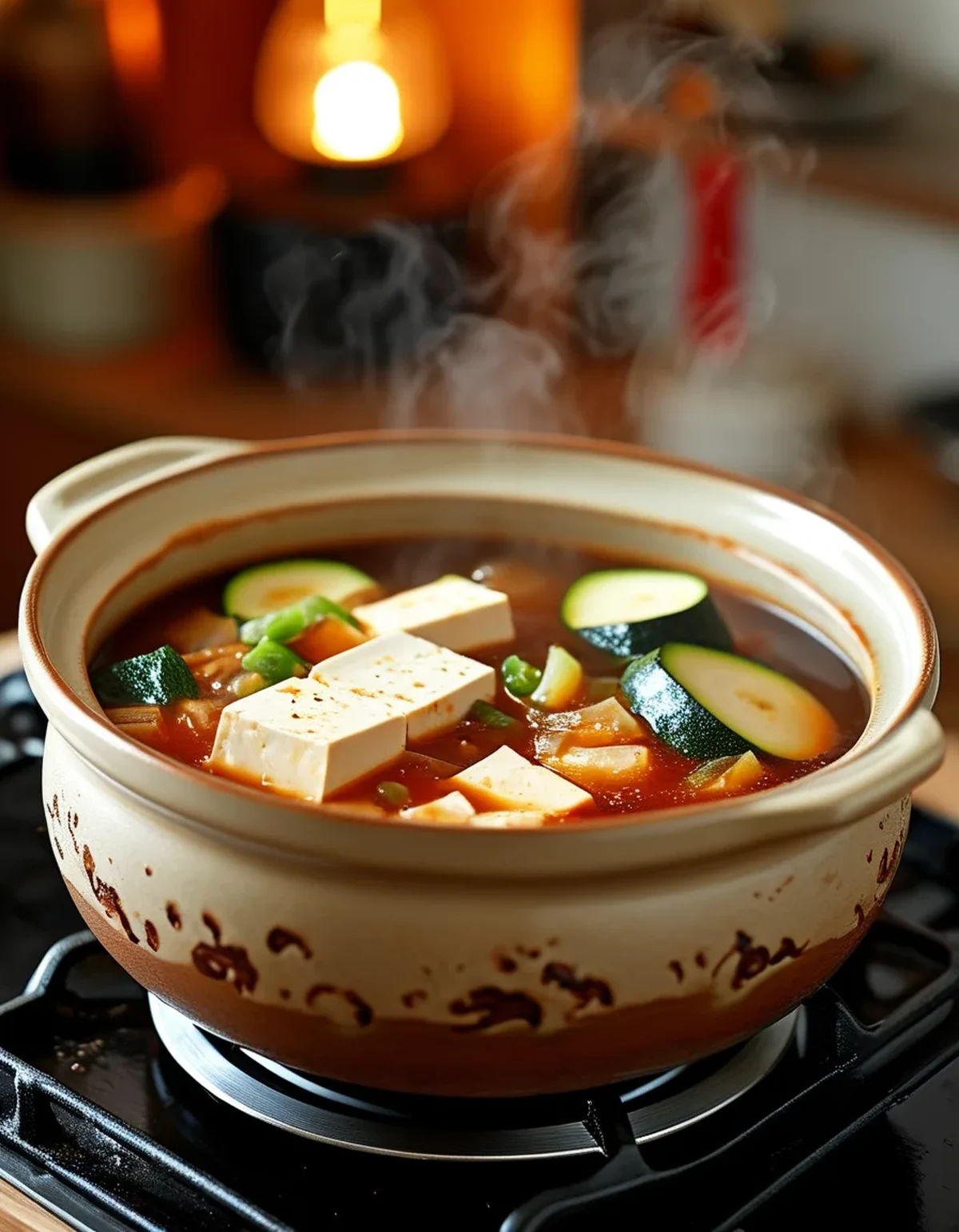
What does rice water actually add to the stew?
Ssalddeumul is the cloudy water from the second rinse of your rice — not the first, which carries dust and surface debris, and not the fifth, which is basically clear.
That cloudiness is suspended starch. In the pot it does three things: it slightly thickens the broth so it clings to a spoon instead of running off, it softens the sharp fermented edge of doenjang by giving it something to bind to, and it makes the stew feel fuller in the mouth at the same salt level.
Nothing about it is mystical. It is body. A stew with body reads as rich; a stew without it reads as salty water with things floating in it.
If you already cooked your rice, a workaround: whisk half a teaspoon of rice flour into a cup of water. Not identical, but closer than plain water by a wide margin.
Why does anchovy-kelp broth make such a difference?
Because it supplies free glutamates and inosinate, and those two together produce a savory effect substantially larger than either alone. This is why the combination shows up in Korean, Japanese, and Chinese base broths independently.
The quick version takes 12 minutes:
- 6 to 8 dried anchovies, heads and guts removed (the guts are the bitterness)
- 1 piece of dried kelp about 4 inches square
- 4 cups water
Bring to a bare simmer, pull the kelp out at 10 minutes — kelp past 15 minutes turns slippery and faintly bitter — and strain the anchovies at 12. That is it. Make a double batch and refrigerate half for up to three days.
Dry-toasting the anchovies in the pot for 60 seconds before adding water deepens it noticeably and costs nothing.
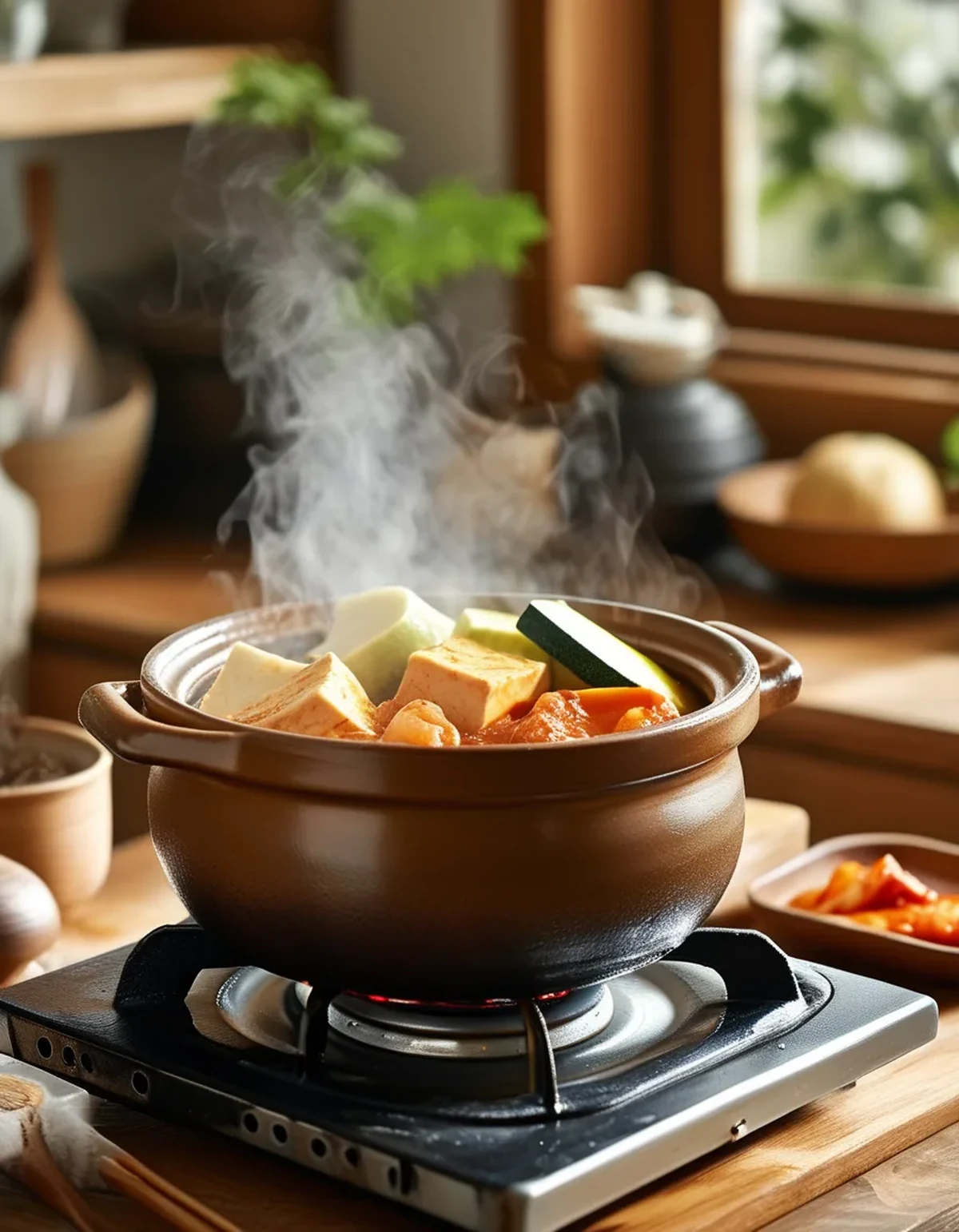
5 Mistakes That Flatten a Doenjang Jjigae
- Boiling the doenjang hard from the start. Long violent boiling drives off the aromatic compounds you are paying for. Add the paste, bring to a simmer, and keep it there.
- Dissolving the paste in the pot. Lumps of undissolved doenjang mean uneven seasoning. Mash it into a ladle of hot broth first, then stir that in.
- Skipping the aromatics. A little minced garlic and a piece of onion give the stew a sweet backbone. Doenjang alone is one dimension.
- Adding tofu too early. Silken tofu in at the last 3 minutes stays intact; in at the start it disintegrates and clouds the broth.
- Adding salt separately. Doenjang brands vary enormously in sodium. Taste at the end and adjust with a small spoon of paste, not salt — you want to raise flavor and salt together.
The third one is where most home versions go wrong, and it is the easiest to fix.
How do you build it in the right order?
Order changes the result more than ingredient list does:
- Heat a little sesame or neutral oil, brown a small amount of beef, pork, or dried anchovy for 2 minutes
- Add aromatics — garlic, onion, the white parts of scallion — for 1 minute
- Pour in the rice water or anchovy broth, bring to a simmer
- Whisk in doenjang through a ladle, plus a small spoon of gochujang if you want depth over heat
- Add hard vegetables — potato, zucchini, mushroom — and simmer 6 to 8 minutes
- Tofu and green scallion in the last 3 minutes, chili last
Serve it actively bubbling. Doenjang jjigae loses a surprising amount of its character between 190°F and 160°F, which is why the stone pot exists at all.
FAQ: Doenjang Jjigae Questions, Answered
Can I use miso instead of doenjang?
You can, but it is a different stew. Miso is smoother and sweeter; doenjang is funkier and more assertive. If using miso, expect to add more of it and consider a splash of fish sauce for depth.
Why does mine taste better the next day?
Starch continues to hydrate, and salt and glutamates redistribute evenly through the solids overnight. Reheat gently rather than boiling and it improves again.
Is the white film on my doenjang mold?
Usually it is a harmless yeast layer or salt crystallization, common on aged paste. Fuzzy or colored growth is different — that one goes in the trash.
TL;DR:
- Plain water gives the stew nothing to build on; the base liquid is the actual variable
- Second-rinse rice water adds starch body that makes the same salt level taste fuller
- A 12-minute anchovy and kelp broth adds glutamates and costs almost no effort
- Mash paste through a ladle, add tofu late, and keep it at a simmer rather than a hard boil
Make it once with plain water and once with rice water, same everything else. The difference is not subtle, and you will not go back.
Keep Reading
This article is for general informational purposes only and is not medical advice. Always consult a qualified health professional for guidance specific to you.