Why Homemade Bibimbap Never Quite Tastes Like the Restaurant Version
Bibimbap made at home with genuinely good ingredients and a reasonably correct recipe still often falls short of the restaurant version in a way that’s hard to pin down, and the gap traces back to specific technique and equipment factors that most home recipes don’t fully address. Here are the actual factors that create the difference and how to close the gap at home.
The Actual Factors That Create the Restaurant-Quality Difference
What most home recipes underweight: the the-stone-or-hot-bowl-crisping-effect-on-the-bottom-layer-of-rice-is-a-major-textural-component-most-home-versions-skip-entirely (the sizzling stone bowl or hot bowl version of bibimbap creating a genuinely distinct crispy, toasted bottom rice layer that a standard mixing bowl at home simply can’t replicate, a major textural component that most home versions skip entirely rather than approximate, per the korean-bibimbap-bowl-guide logic — the sizzling-stone-bowl-or-hot-bowl-version-creating-a-genuinely-distinct-crispy-toasted-bottom-rice-layer-that-a-standard-mixing-bowl-simply-cant-replicate-a-major-textural-component-most-home-versions-skip-entirely), the the-each-individual-vegetable-and-topping-component-is-typically-seasoned-and-prepared-completely-separately-with-its-own-specific-technique-rather-than-cooked-together (the individual namul vegetable components traditionally being seasoned and prepared completely separately, each with its own specific technique suited to that particular ingredient, rather than cooked together in a single batch the way many simplified home recipes approach it, per the korean-banchan-guide logic — the individual-namul-components-traditionally-being-seasoned-and-prepared-completely-separately-each-with-its-own-specific-technique-rather-than-cooked-together-in-a-single-batch), the the-the-final-seasoning-balance-particularly-the-gochujang-mixture-is-typically-fine-tuned-per-batch-rather-than-following-one-fixed-ratio-every-time (the final gochujang-based sauce mixture typically getting fine-tuned in proportion and balance for that specific batch of ingredients rather than following one fixed universal ratio every time, an adaptive technique most simplified home recipes don’t build in, per the healthy-korean-recipes-to-try-guide logic — the final-gochujang-based-sauce-mixture-typically-getting-fine-tuned-in-proportion-and-balance-for-that-specific-batch-rather-than-following-one-fixed-universal-ratio-every-time), and the frame (the actual gap-creating factors as the crisping effect from stone or hot bowl preparation, individually seasoned rather than batch-cooked vegetable components, and adaptively fine-tuned rather than fixed sauce proportions — genuine technique and equipment factors well beyond simply following a written recipe’s ingredient list).

Why Recipe-Following Alone Never Fully Closes This Particular Gap
The limits of following instructions more carefully: the recipes-can-list-ingredients-and-approximate-steps-but-cant-fully-transmit-the-tactile-judgment-behind-knowing-when-a-pan-or-sauce-is-actually-right (the written recipes being able to list ingredients and approximate steps but structurally unable to fully transmit the tactile judgment behind knowing exactly how hot a pan needs to be or exactly how a sauce should taste before it’s balanced, judgment that develops through repeated hands-on practice rather than through reading more carefully, per the korean-food-health-guide logic — the written-recipes-being-able-to-list-ingredients-and-approximate-steps-but-structurally-unable-to-fully-transmit-the-tactile-judgment-behind-knowing-when-a-pan-or-sauce-is-actually-right), and the frame (the limits of recipe-following as a structural gap in what any written recipe can actually convey — meaning the remaining gap after careful recipe-following closes mainly through repeated hands-on practice, not through finding a more detailed recipe).
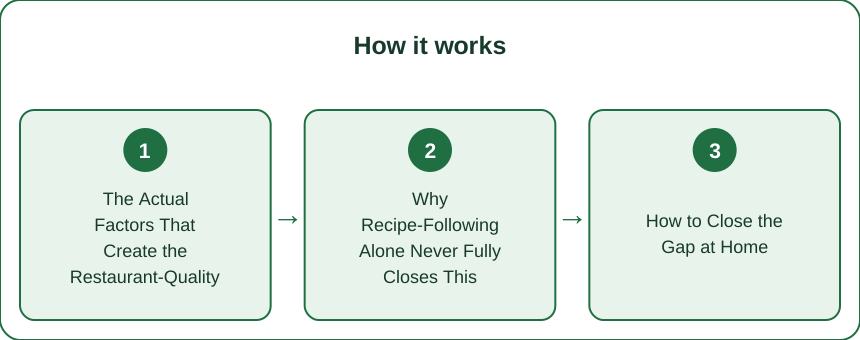
How to Close the Gap at Home
The practical approach: the use-a-well-preheated-heavy-cast-iron-or-stone-vessel-to-approximate-the-crisping-effect-even-without-genuine-restaurant-equipment (the using a well-preheated heavy cast iron pan or an actual stone bowl if available, getting it genuinely hot before adding rice, approximating much of the crisping effect even without exact restaurant-grade equipment, per the korean-bibimbap-bowl-guide practical logic — the using-a-well-preheated-heavy-cast-iron-pan-or-an-actual-stone-bowl-getting-it-genuinely-hot-before-adding-rice-approximates-much-of-the-crisping-effect-even-without-exact-restaurant-grade-equipment), the the-prepare-each-vegetable-component-separately-with-its-own-brief-seasoning-step-rather-than-cooking-everything-together-in-one-pan (the taking the extra time to prepare each vegetable topping separately with its own brief seasoning step, rather than the time-saving shortcut of cooking everything together, directly closing the individually-seasoned-components gap, per the kimchi-guide-beginners-guide adjacent technique logic — the taking-the-extra-time-to-prepare-each-vegetable-topping-separately-with-its-own-brief-seasoning-step-directly-closes-the-individually-seasoned-components-gap), the the-taste-and-adjust-the-final-sauce-proportions-for-the-specific-batch-rather-than-measuring-out-a-fixed-recipe-ratio-blindly (the actually tasting and adjusting the gochujang sauce mixture for the specific batch of ingredients being used that day, rather than measuring out a fixed ratio without tasting, directly addressing the adaptive-seasoning gap, per the korean-food-health-guide logic — the actually-tasting-and-adjusting-the-gochujang-sauce-mixture-for-the-specific-batch-rather-than-measuring-a-fixed-ratio-without-tasting-directly-addresses-the-adaptive-seasoning-gap), and the frame (the way to close the gap as using a well-preheated heavy vessel to approximate the crisping effect, preparing vegetable components individually rather than in one batch, and tasting and adjusting the final sauce for the specific batch rather than following a fixed ratio blindly — addressing the actual technique and equipment factors that create the restaurant-quality difference, not just following the ingredient list more carefully).
Homemade bibimbap falls short of the restaurant version because a sizzling stone or hot bowl creates a genuinely distinct crispy, toasted bottom rice layer that a standard mixing bowl simply can’t replicate, individual vegetable components are traditionally seasoned and prepared completely separately with their own specific technique rather than cooked together in one batch, and the final gochujang sauce mixture typically gets fine-tuned for that specific batch rather than following one fixed universal ratio — genuine technique and equipment factors most simplified home recipes skip. Closing the gap means using a well-preheated heavy cast iron pan or an actual stone bowl if available to approximate much of the crisping effect, taking the extra time to prepare each vegetable topping separately with its own brief seasoning step rather than cooking everything together as a shortcut, and actually tasting and adjusting the final sauce proportions for that day’s specific batch rather than measuring out a fixed ratio without tasting.
Keep Reading
This article is for general informational purposes only and is not medical advice. Always consult a qualified health professional for guidance specific to you.