Bibimbap: How to Build Korea's Perfect Balanced Bowl at Home
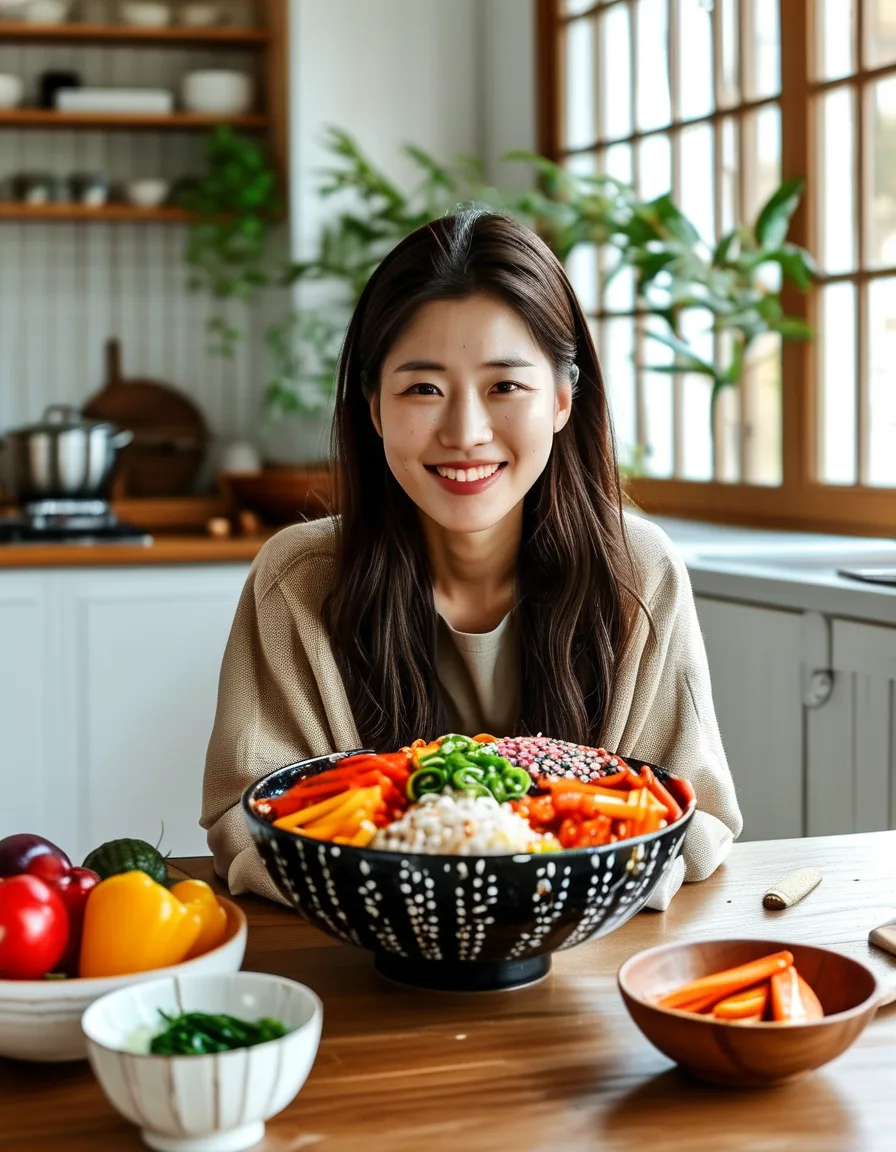
Bibimbap — the Korean rice bowl topped with an array of seasoned vegetables, protein and a fried egg — is a masterclass in the balanced bowl: colorful, nutritious, satisfying and endlessly adaptable. The K-food guide: why bibimbap is balanced, how to build your bowl and how to make it your own.
The Bibimbap-Is-Balanced Case
Why bibimbap is the perfect bowl: the the-balanced-composition (the bibimbap balancing rice, veg, protein and egg from the korean-food-health chapter — the the-balance; the balanced-bowl), the colorful-and-nutritious (the bibimbap’s colorful, nutrient-dense array from the korean-food-health chapter — the the-color; the nutritious), the satisfying-and-adaptable (the bibimbap being satisfying-and-adaptable from the korean-banchan chapter — the the-adaptable; the flexible), the the-veg-forward (the bibimbap’s vegetable-forward composition from the korean-food-health chapter — the the-veg-forward; the veg-heavy), and the reframe (the bibimbap as a balanced, colorful, nutritious, adaptable perfect-bowl).

The Build-Your-Bowl Method
Building a bibimbap bowl: the the-rice-base (the a-rice base (white or brown) from the korean-food-health chapter — the the-rice; the the-base), the the-seasoned-vegetables (the an-array of seasoned vegetables (namul) from the korean-banchan chapter — the the-veg; the seasoned-veg), the the-protein (the a-protein (beef, tofu, egg) from the korean-food-health chapter — the the-protein; the add-protein), the the-fried-egg (the a-fried egg on-top — the the-egg; the the-egg), the the-gochujang-sauce (the gochujang sauce for flavor from the kimchi-guide-beginners chapter’s Korean-flavor logic — the the-sauce; the the-gochujang), the the-arrange-and-mix (the arranging then mixing-it-all from the korean-food-health chapter — the the-mix; the mix-it-up), the the-kimchi-on-the-side (the kimchi as a-side from the kimchi-guide-beginners chapter — the the-kimchi; the the-side), and the the-sesame-and-garnish (the sesame-oil and garnish for flavor — the the-garnish; the finish-it).
The Make-It-Your-Own Notes
Making bibimbap your own: the the-vary-the-vegetables (the varying the seasoned-vegetables from the korean-banchan chapter — the the-veg-variety; the any-veg), the the-choose-your-protein (the beef, tofu, chicken or egg-only from the korean-food-health chapter — the the-protein-choice; the your-protein), the the-brown-rice-or-grains (the brown-rice or grains for more-fiber from the korean-food-health chapter — the the-grain; the whole-grains), the the-adjust-the-spice (the gochujang to your spice-level from the kimchi-guide-beginners chapter — the the-spice; the your-heat), the the-use-leftovers (the leftover veg-and-protein in bibimbap from the korean-banchan chapter — the the-leftovers; the use-them-up), the the-meal-prep-it (the prepping components for the week — the the-meal-prep; the batch-it), the the-healthy-and-satisfying (the bibimbap as healthy-and-satisfying from the korean-food-health chapter — the the-nutrition; the well-fed), and the frame (bibimbap as a rice-veg-protein-egg-and-gochujang balanced bowl, endlessly-customizable — Korea’s perfect balanced bowl. Build bibimbap — a rice base topped with seasoned vegetables (namul), a protein, a fried egg and gochujang, arranged then mixed — endlessly customizable with any veg, your protein, whole grains and your spice level: Korea’s perfect balanced bowl at home.
Bibimbap — the Korean rice bowl topped with seasoned vegetables, protein and a fried egg — is a masterclass in the balanced bowl: colorful, nutritious, satisfying and endlessly adaptable. Build it: a rice base, an array of seasoned vegetables (namul), a protein (beef, tofu, egg), a fried egg, gochujang sauce, arranged then mixed — with kimchi on the side and sesame-and-garnish. Make it your own — vary the vegetables, choose your protein, use brown rice or grains, adjust the spice, use leftovers, and meal-prep the components. How to build Korea’s perfect balanced bowl at home.
Keep Reading
This article is for general informational purposes only and is not medical advice. Always consult a qualified health professional for guidance specific to you.