Kimchi for Beginners: Buying, Eating and Loving Korea's Living Side Dish
Kimchi is having its global decade — the fermented icon that gut-health science keeps endorsing — and the beginner standing at the refrigerated case deserves a guide: which jar, how to store the thing that keeps fermenting, and what to do when the first bite fights back.


The Variety Map
Beyond the one jar: the baechu standard (the napa-cabbage classic — the default ‘kimchi’ and the right first jar; the balance of funk, heat and crunch that everything else riffs on), the radish family (kkakdugi’s cubed crunch — the beginner-friendly texture; the chonggak whole-radish tier for the committed), the water kimchis (dongchimi and nabak — the mild, broth-y, barely-spicy tier; the gateway for heat-averse households and the summer-refreshment tradition), the quick-and-fresh styles (geotjeori’s unfermented salad-like take — the kimchi-curious first step), and the heat-level honesty (the white-kimchi options for zero-spice eaters — the fermented benefits without the fire; the variety map meaning nobody is excluded by heat).
The Buying-and-Storing Craft
Jar literacy: the refrigerated-section rule (live kimchi lives in the fridge case — the shelf-stable pasteurized jars being a different, culture-free product; the live-cultures logic from the fermented-foods chapter), the label checks (the shorter ingredient lists leaning traditional — the fish-sauce note for pescatarian-vegan buyers, with vegan kimchi now standard in most stores), the Korean-grocery advantage (the H-Mart-tier selection and freshness — the store-made tubs as the quality benchmark; the small-jar first purchase before committing to the family tub), the storage reality (kimchi keeps fermenting in your fridge — the jar that gets sourer weekly; the burp-the-jar habit for the fizzy phase, the smell being normal and the separate-container diplomacy for shared fridges), and the age-stages frame (the fresh-crunchy first week, the balanced middle month, the sour-soft veteran stage — none of them ‘gone bad’; the mold-check honesty being the only real spoilage test).
The Eating Repertoire
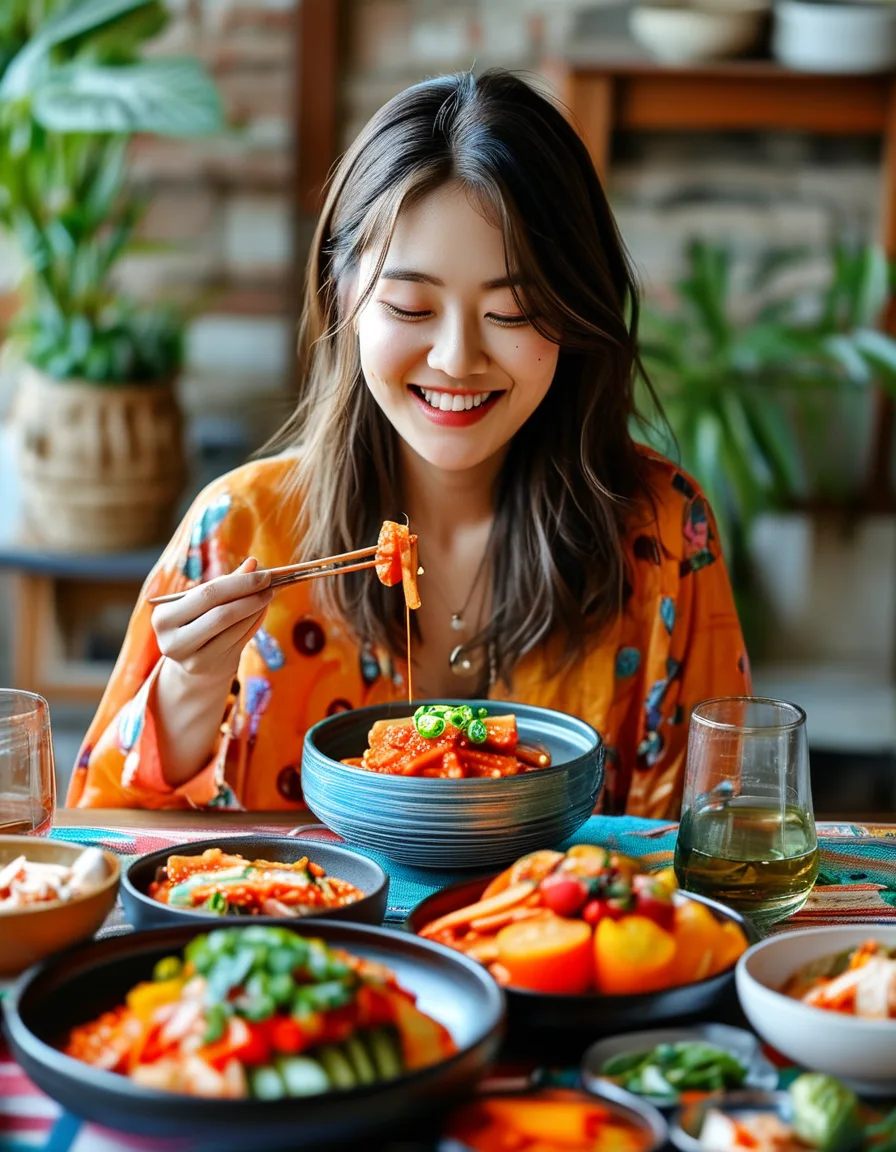
Beyond the side bowl: the side-dish default (the few forkfuls alongside rice-and-protein meals — the palate-cleansing acid that Korean tables engineer; the daily-ferment dose from the gut-immune chapter delivered), the eggs-and-grain-bowl moves (the kimchi-fried-rice classic — the sour veteran kimchi’s best destiny; the breakfast-eggs-with-kimchi habit that converts skeptics), the soup-and-stew tier (kimchi jjigae — the aged-kimchi stew that’s the cuisine’s comfort centerpiece; the cooking that mellows heat while keeping depth, though heat kills the live cultures — the raw daily dose still doing the probiotic work), the fusion honesty (the kimchi grilled cheese, the tacos, the pasta — the borrowings that work and offend nobody reasonable), and the pairing logic (the rich-and-fatty foods that kimchi’s acid was born to cut — the fried chicken, the pork belly, the buttered anything).
The Health Frame
The science without the hype: the fermented-food credentials (the live cultures and the diversity association from the gut chapters — kimchi as the fiber-plus-ferment double), the vegetable-intake sleight (the kimchi habit quietly adding daily vegetables — the produce serving hiding in the side dish), the sodium honesty (kimchi is salty — the portion-context math; the few-forkfuls dose fitting fine in most diets, the blood-pressure-managing eaters portioning mindfully per the doctor’s guidance), the spice-adaptation note (the heat tolerance that builds across weeks — the beginner starting small and sour-averse starting fresh; the acquired taste that genuinely gets acquired), and the culture close (kimchi as a living tradition, not a supplement — the respect for the food’s home cuisine; the jar as the most delicious entry in the gut-health toolkit). Start with baechu, keep it cold, eat a few forkfuls daily: the living side dish, befriended.
Buy refrigerated live kimchi (start with napa classic or mild radish), expect it to sour weekly, and eat a few forkfuls daily — fresh for crunch, aged for fried rice and stew.
Keep Reading
This article is for general informational purposes only and is not medical advice. Always consult a qualified health professional for guidance specific to you.